Not known to many, there are different subspecies of Giraffe. Each subspecies is distinct in patterns and colors. They are also differentiated by size and range.
Here are the different subspecies of Giraffes in the world.
Somali Giraffe (G. c. reticulata)
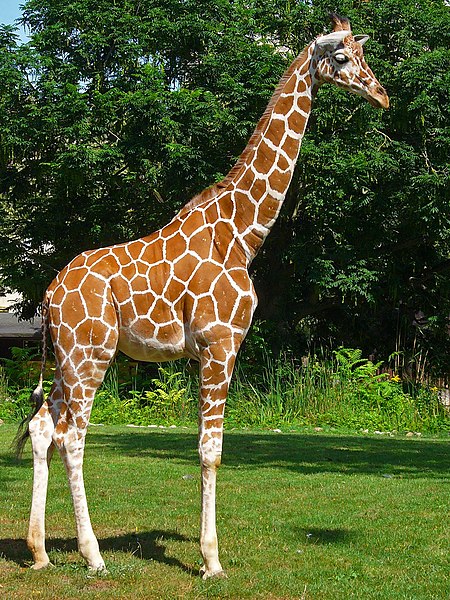
This subspecies is commonly known as the Reticulated or Somali Giraffe. It has a coat pattern of well defined patches that are normally a bright orange-brown color. These patches have sharp edges and are separated by bold, bright white lines. This subspecies lives in northeastern Kenya, southern Ethiopia and Somalia. The Reticulated Giraffe is the most commonly kept giraffe in zoos and it has been estimated that fewer than 5.000 remain in the wild.
Rothschild Giraffe (G. c. rothschildi)

The Rothschild Giraffe has coats that bear deep brown, blotched or rectangular spots with poorly defined cream lines. Its legs are mostly white with no pattern. It can be found in Uganda, Sudan and Kenya near Lake Baringo. More than 450 are kept in zoos while fewer than 700 are believed to remain in the wild. It is also called Baringo Giraffe or Ugandan Giraffe.
Nubian Giraffe (G. c. camelopardalis)

The Nubian Giraffe is characterized by coat pattern which are large and four-sided spots of chestnut brown on an off-white background and no spots on inner sides of the legs or below the hocks. This subspecies thrive in northeastern Democratic Republic of Congo and in eastern Sudan. It is very rare in captivity and it has been estimated that fewer than 250 remain in the wild. A Nubian Giraffe is kept at Al Ain Zoo of United Arab Emirates.
Maasai Giraffe (G. c. tippelskirchi)
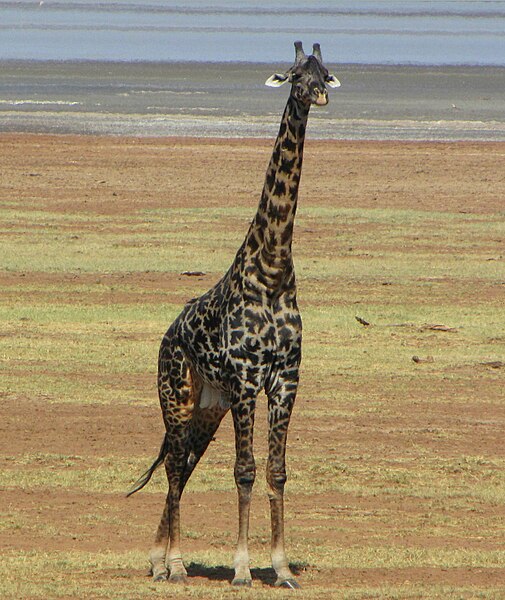
This subspecies is commonly known as the Maasai Giraffe and has jagged-edged, vine-leaf shaped spots of dark brown on a brownish-cream background. It is the darkest colored subspecies and it can be found in Kenya and Tanzania. About 100 individuals are kept in zoos while it is estimated that fewer than 40,000 remain in the wild. Maasai Giraffe is the largest subspecies of giraffe and the tallest land mammal. It is also known as Kilimanjaro Giraffe.
West African Giraffe (G. c. peralta)

This subspecies of giraffe is commonly known as the Nigerian or West African Giraffe. It has numerous pale, yellowish red spots. It is native to southern Niger ant is the rarest subspecies with fewer than 220 individuals remaining in the wild. This giraffe is distinguished by its light colored spots. It is also known as Niger Giraffe.
South African Giraffe (G. c. giraffa)
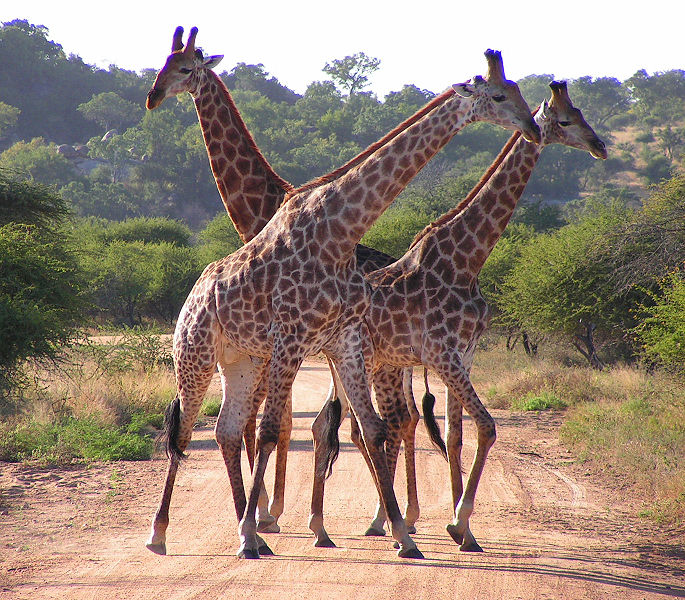
The South African Giraffe has rounded or blotched spots, some with star-like extensions on a light tan background, running down to the hooves. It can be found in Botswana, Mozambique, South Africa and Zimbabwe. About 45 individuals are kept n zoos and it is estimated that fewer than 12,000 remain in the wild.
Rhodesian Giraffe (G. c. thornicrofti)
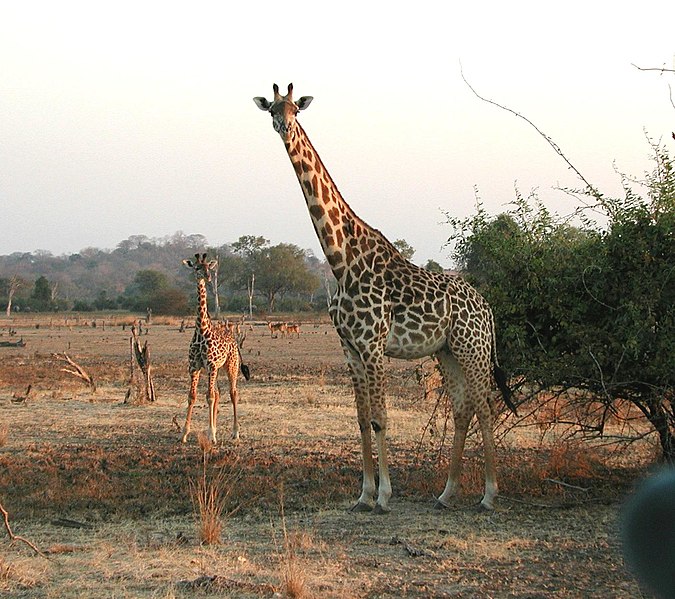
This giraffe subspecies is commonly called the Thornicroft Giraffe. It has star-shaped or leafy spots extend to the lower leg. It is restricted to the Luangwa Valley in eastern Zambia. It is estimated that fewer than 1,500 remain in the wild. This subspecies is not kept in zoos. It is also known as Rhodesian Giraffe.
Kordofan Girraffe (G. c. antiquorum)

The Kordofan Giraffe has smaller, more irregular spots that cover the inner legs. It can be found in Chad, Central African Republic and Cameroon. About 65 individuals are kept in zoos and fewer than 3,000 are believed to remain in the wild.
Smoky Giraffe (G. c angolensis)

The Smoky Giraffe or more popularly known as Angolan Giraffe has large spots with some notches around the edges, extending down the entire lower leg. It lives in Angola, Namibia, Botswana, Zambia and Zimbabwe. About 20 individuals are kept in zoos and it has been estimated that fewer than 20,000 remain in the wild.
See also