Chitika

Showing posts with label Bizarre Birds. Show all posts

Friday, October 7, 2011

Weirdest And Unique Creatures in The Avian World


A list of bizarre but beautiful and unusual species of birds.

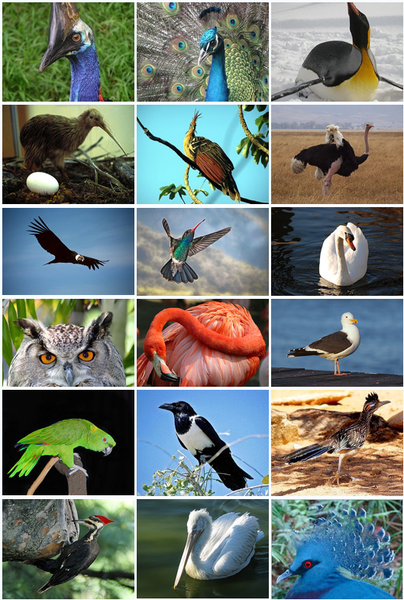
There are more or less 9,000 known species of birds in the world. On this particular article, you will see a combination of weird-looking and amazingly unique species of birds. 
Helmeted Hornbill (Rhinoplax vigil)


Image Source


I am pretty sure that the first thing you'll do when you encounter this creepy creature in the wild is to run for your dear life. Who will not be afraid with the "horrible-looking" Helmeted Hornbill? This bird is a very large bird in the hornbill family. It is found in the Malay Peninsula, Sumatra and Borneo. The body length is 95-120 cm. Males weigh 3.1 kg and females weigh about 2.7 kg. Unlike other hornbills, the Helmeted Hornbill's casque is solid, and the skull including the casque and bill may constitute 10 percent of the bird's weight.

The casque is the source of a valuable carving material, hornbill ivory. Indigenous peoples also use the central tail feathers to decorate dancing cloaks and head-dresses. The Punan people believe that a large Helmeted Hornbill guards the river between life and death.

Friday, August 12, 2011

Bizarre and Unique Sleeping Habits of Birds


Some bird species are unusual in their sleeping habits. Scroll down to find out their bizarre sleeping habits.

1.) Vernal Hanging Parrot


A few parrots of the genus Loriculus like the Vernal Hanging Parrot, are unique in their sleeping style. These birds roost by hanging upside down which make them unique among birds for this peculiar position of sleeping.

2.) American Flamingo


American Flamingos and many other bird species have unique sleeping style. These birds tuck their head into their back when sleeping. These birds bend their heads over their backs and tuck their bills in their back feathers when sleeping. While other species place their beaks among their breast feathers.

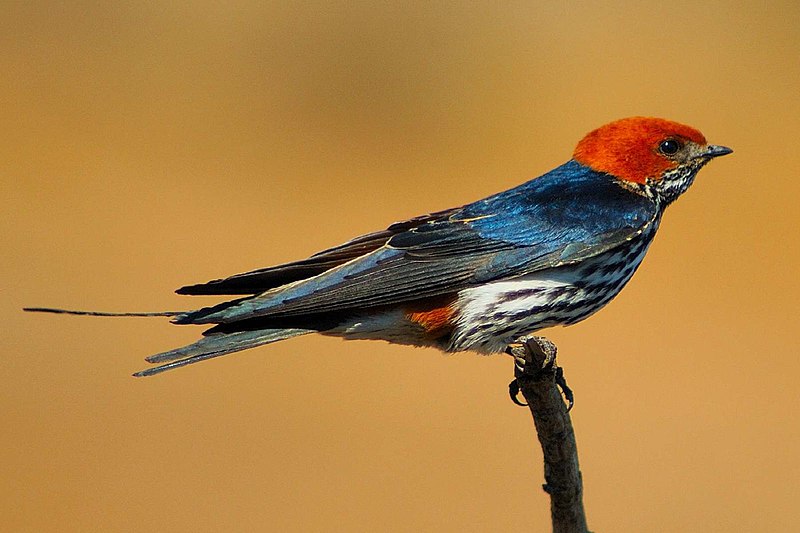
3.) Lesser Stripe Swallow


Many perching birds like the Lesser Stripe Swallows have a tendon locking mechanism that helps them hold on to the perch when they are asleep.

4.) Swift


Swifts are among the few animals in the world with the most peculiar sleeping habit. These birds are believed to be able to sleep in flight and radar observations suggest that they orient themselves to face the wind in their roosting flight. Don’t imitate these birds especially if you are driving.

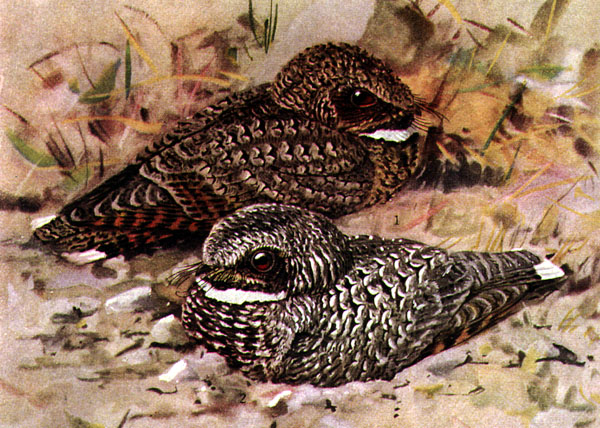
5.) Common Poorwill


The only known species of bird that enters a state of hibernation is the Common Poorwill, a nocturnal bird that can be found from British Columbia down to Mexico.

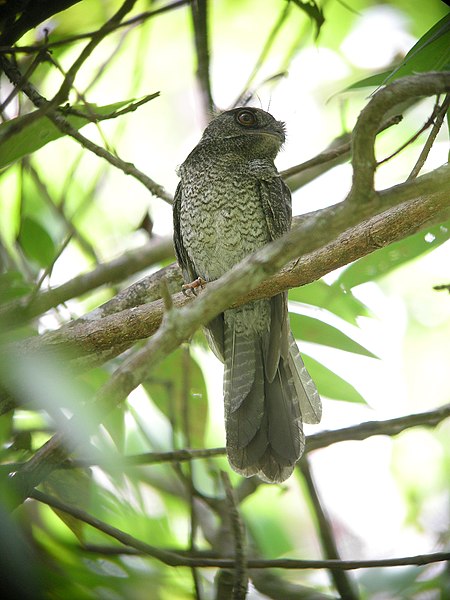
6.) Owlet-nightjar


Some hummingbirds, owlet-nightjars, nightjars and woodswallows go into a nightly state of torpor accompanied with a reduction of their metabolic rates.

7.) Quails and Pheasants


Pheasants and Quails, including many other ground birds, roost in trees.

8.) Numerous Birds


Many birds rest on one leg, while some may pull up their legs into their feathers, especially in cold weather.

Some birds have also demonstrated the capacity to fall into slow-wave-sleep on one hemisphere of the brain at a time. The birds tend to exercise this ability depending upon its position relative to the outside of the flock. This may allow the eye opposite the sleeping hemisphere to remain vigilant for predators by viewing the outer margins of the flock.

See also

Monday, August 8, 2011

Bizarre and Oddest-Looking Birds in the World

Creepy-Looking Winged-Billed-Creatures

There are about 9,000 species of birds. With this numerous number, there are colorful birds, large and small birds and there are also creepy-looking birds. Here are some of the creepiest-looking winged animals.

1. Greater Adjutant (Leptoptilos dubius)


Image Source

Tall, large and long bill, long legs, and hairless long neck, do you think you think this peculiar-looking winged-creature can't scare you? This wild bird is regarded as the heaviest species of stork - the Greater Adjutant, a large bird that can be found in Assam and Cambodia migrates to Vietnam, Thailand and Burma during winter. The Greater Adjutant is an extraordinary large bird, typically 145-150 cm tall with a 250 cm wingspan. You will surely run as fast as you can once you encountered this creepy bird.

Tuesday, August 2, 2011

Amazingly Unique Nesting, Mating and Hatching Behavior of Birds

Amazingly Unique Nesting, Mating and Hatching Behavior of Birds 

Some species of birds have unusual way of courting, mating, nesting and even hatching. Here are some of them.

Boobies and Gannets

Image Source

These birds have an unusual way of hatching their eggs. Boobies and gannets hatch their eggs by standing on them,warming them with their webbed feet.

Monday, July 25, 2011

Amazingly Interesting Facts About Peculiar Birds’ Nests


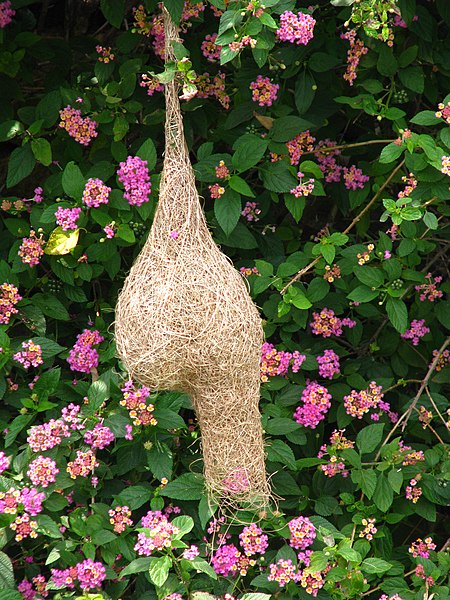
Almost all birds build their own nest. A few don’t build any at all while scores will utilize abandoned nests, burrows or cavities on trees. Some birds are bizarre in creating their nest. Here are some of them.


1.) Cave Swiftlets’ nests are made of their saliva. These saliva nests of Cave Swiftlets are used to make “Bird’s nest soup” in parts of Southeast Asia. Bird’s nest soup is one of the most expensive food in the world and is regarded as an exotic aphrodisiac.

2.) The Horned Coot’s type of nest is called a mound. The base of the enormous nest they built is made of stones which they gathered using only their beaks.

3.) These stones, which are up to 450 g each are dropped into the shallow water of a lake, making a cone-shaped pile which can measure as much as 4 m2 at the bottom and 1 m2 at the top, and 0.6 m in height.

4.) The total combined weight of the mound's stones built by Horned Coots is about 1.5 tons or 1,400 kg. A sizable platform of aquatic vegetation is constructed on top of the mound.

5.) Egyptian Plovers and Three-banded Coursers are distinct in their habit of partially burying their eggs in the sand of their scrapes – the simplest type of nest.


6.) Woodpeckers are among the strongest creatures in relation to their beaks. They use their chisel-like bills to excavate their cavity nests, a process which takes, on average, about two weeks.

7.) The Red-cockaded Woodpecker, an endangered species, takes up to two years to excavate its nest cavity but can reuse it for more than two decades.

8.) Red-cockaded Woodpeckers peel bark around the entrance, and drill wells above and below the hole; since they nest in live trees, the resulting flow of resin forms a barrier that prevents snakes from reaching the nests.

9.) The Red-breasted Nuthatches smear sap around the entrance holes to their nests for protection from predators.

10.) For protection from predators, the White-breasted Nuthatches rub foul-smelling insects around their nests.

11.) Eurasian Nuthatches have a unique way of protecting their nests. They wall up part of their entrance holes with mud, decreasing the size and sometimes extending the tunnel part of the chamber.

12.) Most female Hornbills seal themselves into their cavity nests, using a combination of mud, food remains and their own droppings to reduce the entrance hole to a narrow slit.

13.) Grebes, an aquatic species, are very careful when approaching and leaving the nest so as not to reveal the location. Some species will use leaves to cover up the nest prior to leaving.

14.) The Australian Magpie, a popular Australian bird species, is noted for attacking persons that get near its nest.

15.) It was discovered that some birds choose aromatic green plant material for constructing nests that may have insecticidal properties, while others may use materials such as carnivore scat to repel smaller predators


16.) The Malleefowl uses the sun to help warm its nest. The bird opens the mound at midday during the cool spring and autumn months to expose the plentiful sand incorporated into the nest to the sun's warming rays, then using that warm sand to insulate the eggs during the cold nights. During hot summer months, the Malleefowl opens its nest mound only in the cool early morning hours, allowing excess heat to escape before covering the mound again completely.

17.) Some birds use pieces of snake slough in their nests. It has been suggested that these may deter some nest predators such as squirrels

18.) Seabirds, Penguins, Flamingos, Herons, Gulls, Terns, Weavers and some Corvids and Sparrows gather together in sizeable colonies while most birds nest individually

19.) The nests of Burrowing Parakeets can extend for more than three meters or about 10 ft.

20.) Buff-breasted Paradise Kingfishers have a unique way of building their nests. They dig their nests into the compacted mud of active termite mounds, either on the ground or in trees.

21.) Some Crepuscular petrels and Prions are able to identify their own burrows within dense colonies by smell.

22.) Crab Plovers use burrow nest, the warmth of which allows it to leave the eggs unattended for as long as 58 hours

23.) D’Arnaud’s Barbets dig vertical tunnel shaft more than a meter deep, with its nest chamber excavated off to the side at some height above the shaft's bottom

24.) Puffbird is a ground-nesting species, prefers flat or gently sloping land, digging their entrance tunnels into the ground at an angle.

25.) Like Horned Coots, Flamingos type of nest is also called a mound. These lovely-looking birds make a different type of mound nest. Using their beaks to pull material towards them, they fashion a cone-shaped pile of mud up to 46 cm tall with a small depression in the top to house their single egg. The height of the nest and the circular, often water-filled trench which surrounds it help to protect the egg from fluctuating water levels and excessive heat at ground level.


See also

Reaction

Explore

Custom Search

Chitika

Chitika

Chitika