Chitika

Showing posts with label Animal Trivia. Show all posts

Saturday, December 3, 2011

20 Interesting Facts About the Japanese Spider Crab

Here’s a list of the most amazing information about the gigantic Japanese Spider Crab.

1.) Japanese Spider Crab is known in Japan as Takaashigani which literally means “tall-footed crab”

2.) It is known scientifically known as Macrocheira kaempferi.

3.) This marine crab species can be found in the waters of Japan, hence the common name.

4.) The Japanese Spider Crab has the largest leg span of any arthropod in the world reaching up to 3.8 meters or 12 ft from claw to claw and weighing up to 41 pounds or about 19 kg.

5.) The body of this crab may grow to a size of 40 cm or 16 inches.


6.) The Japanese Spider Crab is unique from all other crab species. The first pleopods of males are unusually twisted, and its larvae appear primitive.

7.) In spite of its odd and ferocious appearance, this creature is known to have a gentle disposition

8.) The Japanese Spider Crab is orange, with white spots along the legs.


9.) Japanese Spider Crabs can be found off the southern coasts of the Japanese island of Honshu, from Tokyo Bay to Kagoshima Prefecture.

10.) They can also be found in Iwate Prefecture and off Su-ao, Taiwan.

11.) This unique marine creature can be found at depths of up to 600 meter, or as shallow as 50 meters.

12.) The Japanese Spider Crab is one of the most unusual aquatic pets in the world and requires a huge tank.

13.) In its natural habitat, this crab species feeds on animal carcasses and shellfish.

14.) The Japanese Spider Crab is one of the longest living creatures in the world living up to 100 years.

15.) Be careful in dealing with this gigantic crab because it has been noted that the crab was known to the Japanese for the serious injuries it can cause with its strong claws.


16.) This arthropod is edible and is occasionally collected for food with a total of 24.7 tonnes collected in 1976 and 3.2 tonnes in 1985.

17.) This crab which is subject to small scale fishery is centered in Suruga Bay.

18.) The population of Japanese Spider Crab has decreased in number, forcing fishermen into exploring deeper waters in order to catch them.

19.) The average size of Japanese Spider Crab caught by fishermen is a leg span of 1.0–1.2 meters.

20.) When its legs are spread out, an adult giant Japanese spider crab can measure 12 feet across and its body can grow to be 15 inches wide.

See also


Thursday, October 20, 2011

The Most Amusing and Bizarre Facts and Traits of Mammals II


Some mammals are simply amazing.

1.) Tiger


  • Tigers are the strongest and largest of all cats in the world.
  • They eat bears, birds, crocodiles, deer, domestic cattle, elephants, fish, frogs, gaurs, leopards, mice, monkeys, moose, pythons, rabbits, turtles, water buffalo, wild boars and wild dogs.

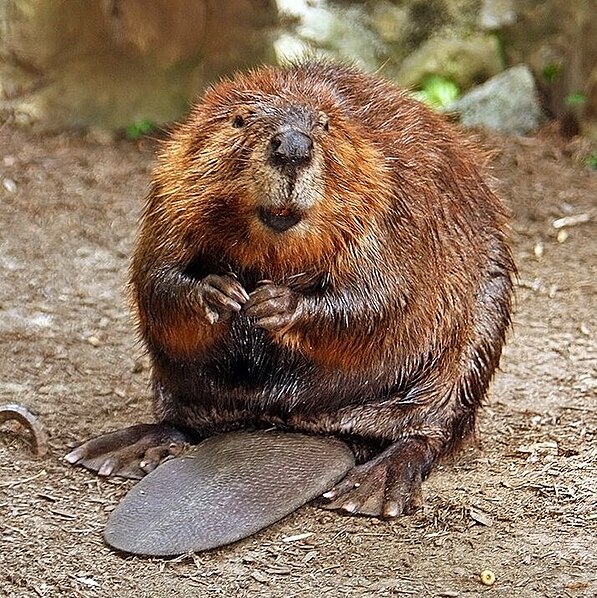
2.) Beaver


  • Beavers are great cutters and builders. They cut trees with their teeth and build their own huge dams.

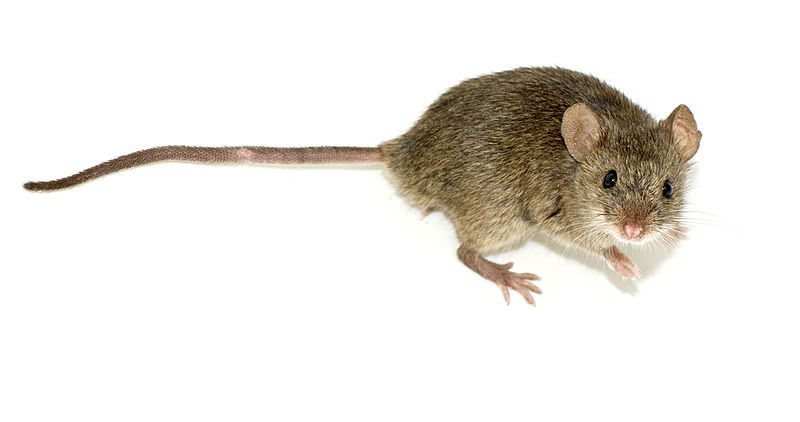
3.) Mouse


  • Mouse is one of the scariest animals in the world. According to a survey, one out of three American women has a fear for mice.
  • They are fast breeders and their population grow very fast because there can be 16 mice in a litter, which makes a swarm.

4.) Dog


  • Dogs are intelligent animals. They can understand a few hundred words and phrases.
  • They are dangerous too. They bite 4,700,000 Americans annually.

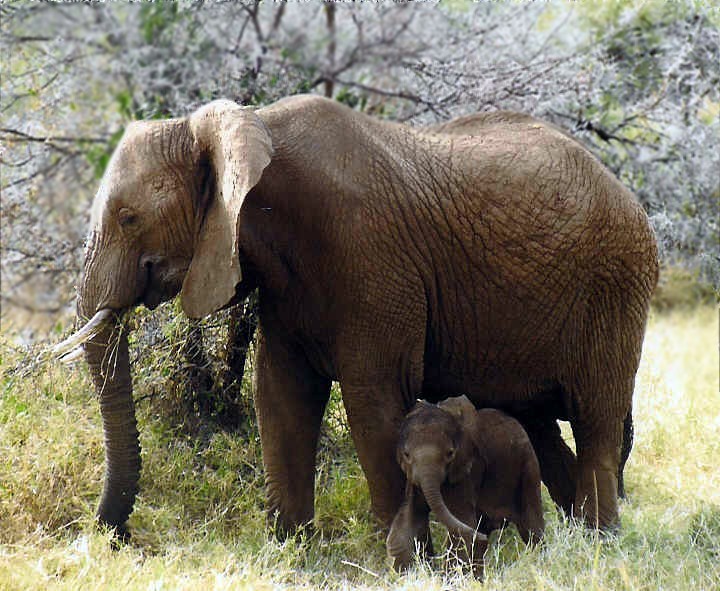
5.) Elephant


  • Elephants are strong animals. Their trunk can hold up to 600 pounds and carry 20,000 pounds.
  • Female Elephants get males to fight for them and she gives birth to a 140 kg baby after a 22-month pregnancy – the longest gestation period in the animal kingdom.

6.) Gorilla


  • Gorillas are strong creatures. They can lift 4,600 pounds which is equivalent to two family cars.
  • In the movie King Kong, he is depicted as a carnivore but in reality, gorillas are strictly herbivorous.

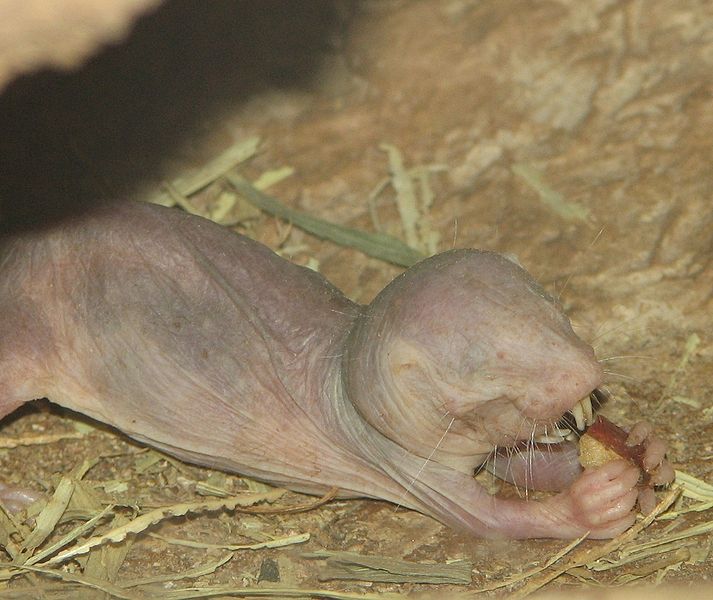
7.) Naked Mole Rat


  • Naked Mole rat’s teeth are very tough. Its incisor bite can go through a cement wall little by little.
  • Like ants and termites, one queen Naked Mole Rat, controls hundreds of Naked Mole Rats.

8.) Orangutan


  • Mother Orangutans are very caring and passionate mothers. They build beds every night for them and their youngster.
  • They swings over 61 m high in the trees on a limb while baby Orangutan hangs on their mother for dear life.
  • Orangutans are smart animals. They have found a way to escape the rain by putting a large leaf on top of their heads.

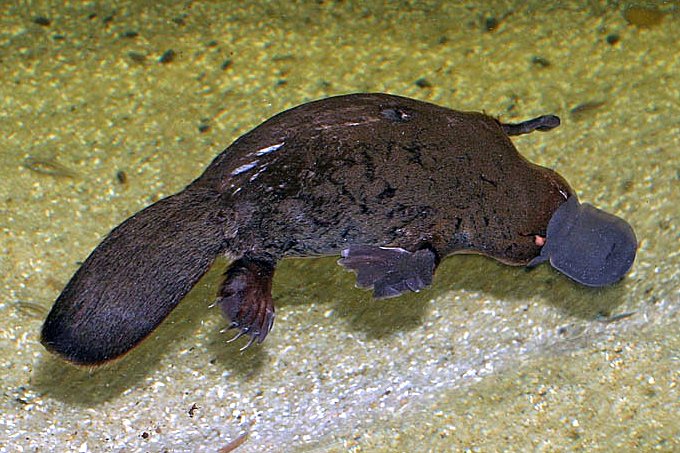
9.) Platypus


  • Platypuses have beaks of ducks, flippers of Otters and tails of beavers. 
  • They can detect the electrical impulses given off by its prey.
  • Male Platypuses hind limbs are venomous.

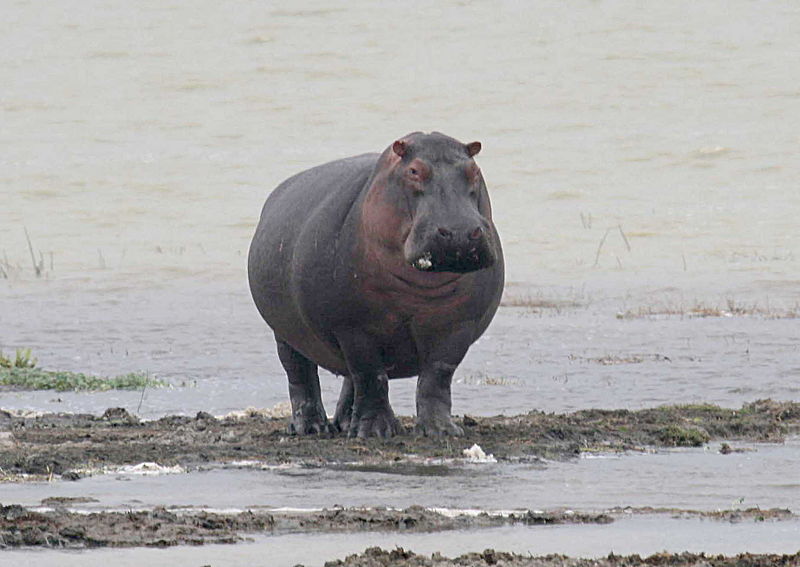
10.) Hippopotamus


  • Male Hippopotamuses are yucky animals. They fling dung or spread their poops everywhere with their tail.
  • They are mighty biters. They can open their jaw up to 170° and snap a crocodile in half.

See also

Tuesday, August 30, 2011

Interesting Facts About the Amazing Goldfish

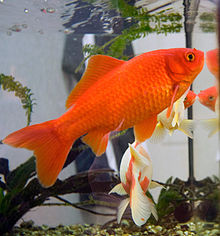
Goldfish are amazing pets. They are among the most popular pet fish in the world. They are beautiful and colorful too. Here are some amazing facts abut the interesting Goldfish.

1.) Goldfish lack a stomach and only have an intestinal tract, and thus cannot digest an excess of proteins. So it is important not to over feed them.
2.) Goldfish may change their color by varying the spectrum of light under which they are kept.
3.) Goldfish produce pigment in response to light. If a goldfish is kept in the dark it will appear lighter in the morning, and over a long period of time will lose its color.
4.) Goldfish can grow to a maximum length of 22 inches 58.42 cm and a maximum weight of 9.9 pounds or 4.5 kg.
5.) The longest goldfish measured was 47.4 cm (18.7 in) from snout to tail-fin end in Hapert, The Netherlands. 


6.) The longest Fancy Goldfish measured was an Oranda called Bruce which measured at 37.2 cm (15 in) in 2002.
7.) Goldfish may live more than 20 years, but most household goldfish generally live only six to eight years.
8.) The oldest recorded goldfish lived to 49 years.
9.) The collective noun for a group of goldfish is a "troubling" of goldfish.
10.) Goldfish can survive if ice form on the pond's surface, as long as there is enough oxygen remaining in the water and the pond does not freeze solid. 


11.) Italy passed a law in 2005 which banned the use of goldfish as carnival prizes. Rome has also banned the keeping of goldfish in goldfish bowls, on the premise that it is cruel for a fish to live in such a small space.
12.) Goldfish have a memory-span of at least three months and can distinguish between different shapes, colors and sounds.
13.) Although edible, goldfish are rarely eaten.
14.) In July 2010 a goldfish measuring 16 inches 0r 41 cm and 5 pounds or 2.3 kg was caught in a pond in Poole, England, thought to have been abandoned there after outgrowing a tank.
15.) A goldfish named "Goldie", kept as a pet in a tank in Folkestone, England, was measured as 15 inches or 38 cm and over 2 pounds 0.91 kg, and named as the second largest goldfish in the world.

See also:

Saturday, July 30, 2011

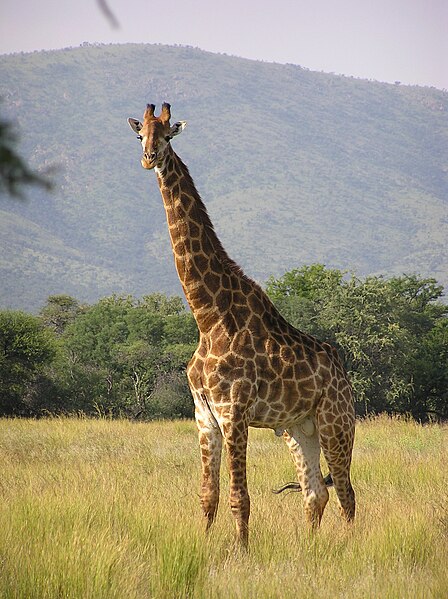
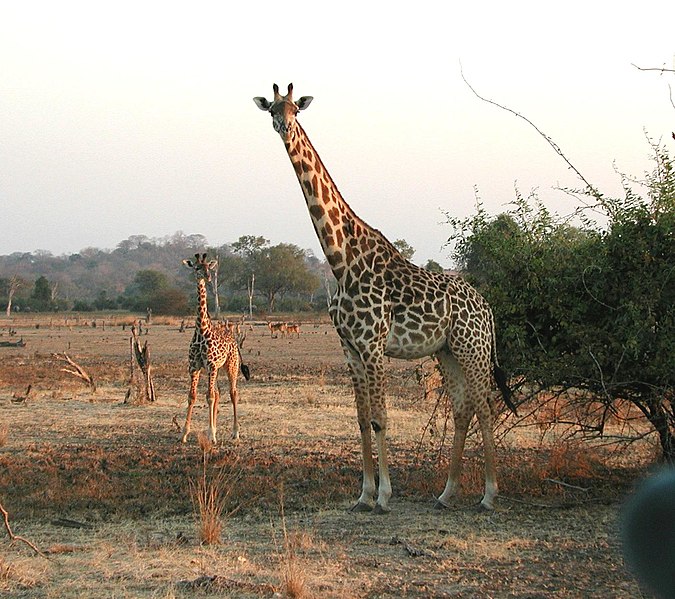
Interesting Facts About the Gigantic Giraffe


Giraffes are among the most fascinating animals on the planet due to their very tall appearance and unique markings which make them among the most well-known animals in the world.

Here’s a long list of interesting and amazing facts about one of the most fascinating animals in the world – the Giraffe.


Image Source

1.) Giraffes are fascinating animals. They have the shortest sleep requirements of any mammal, which is between 10 minutes and two hours in a 24-hour period, averaging 1.9 hours per day

2.) Giraffes are African mammals considered as even-toed ungulate mammals and are related to Okapis.

3.) Giraffes are the tallest of all extant land-living animal species. They can attain a height of up to 5.2 meters or 17 ft tall,

4.) The Tallest male recorded Giraffe stood at about 6 meters or 20 feet tall. That’s equivalent to the height of a 2-story building.

5.) Its scientific name, Giraffa camelopardalis, is referred to its irregular patches of color on a light background which bear a token resemblance to a leopard’s spots while its face is similar to that of a camel.

6.) Ancient Romans and Greeks thought that the Giraffe was a mix between a camel and a leopard, hence the scientific name – Giraffa camelopardalis.

7.) A male Giraffe can weigh up to 1,930 kilograms while a female is up 1,180 kilograms.

8.) A Giraffe’s single step when walking is 15 ft long so you have to run in order to keep up with a walking Giraffe.

9.) The long legs of Giraffes allow them to run as fast as 56 km/h over short distances and cruise comfortably at 16 km/h over longer distances.

10.) During mating season, bulls sometimes battle one another by butting their long necks and heads. Such contests aren’t usually dangerous and usually end when one animal submits and walks away.


Image Source

11.) Giraffes are amongst the animals with the longest tongue – on the average they measure 53-centimeter long.
12.) The most dangerous activity of a Giraffe s drinking because they must spread their legs and bend down in an awkward position to do so which make them vulnerable to predators.
13.) Giraffes have the highest known blood pressure of any mammal in the world which can be up to 280/180mm Hg. That is twice the average human blood pressure.
14.) A Giraffe’s heart beat is up to 170 times/minute while its heart pumps about 16 gallons of blood/minute.
15.) On the average, a Giraffe drinks up to 10 gallons of water per day.
16.) This is why Giraffes only need to drink once every several days. They get most of the needed water from the plants they eat.
17.) Giraffe’s only real predator is the lion and a female Giraffe use their hooves as weapons only to defend their young and hey are strong enough to kill a lion.
18.) Giraffes and Oxpeckers, more commonly known as Tick Birds are good friends. The Oxpeckers help keep the Giraffe parasite free because they eat ticks and other parasites off of the Giraffes skin.
19.) Unlike Crocodiles, Giraffes have no tear ducts but they have been seen crying.
20.) Unlike humans, a female Giraffe give births standing up. A newly born Giraffe, which is called a ‘calf’, must endure falling more than 1.5 meters head first to the ground.


Image Source

21.) Newly born Giraffes are amazing. In half an hour, they can already stand up and within 10 hours after birth, they can already run.
22.) Like Zebras, no two individual Giraffe have exactly the same pattern although Giraffes from the same area look the same.
23.) An individual Giraffe eats up to 34 kg of food a day and its primary food is Acacia leaves.
24.) Although Giraffes are known to have the longest necks in the world, its extremely long neck is actually too short to reach the ground.
25.) Giraffes can only be found naturally in Africa and the color of their tongue is black.
26.) Giraffes have the longest tail of any land mammals. Their tails usually measure 8 ft long including the tuft at the tail’s end. Their tails are used as good luck charms, thread and flywatters.
26.) Blue Whales have the largest hearts in the world. Giraffes have hearts that measure 2 feet long and can weigh 11.4 kg.
27.) Giraffes were born with horns and they have never been observed bathing and they would be clumsy and unstable in water.
29.) Female Giraffes are amazing mothers; they form a type of daycare for their young. One of the females in the heard will stay behind and baby sits all of the youngsters while the rest of the females go out foraging for food.
30.) Giraffe’s average territorial range is approximately 46 square miles and the male species is known as ‘bull’ while the female species is known as ‘cow’.


Image Source

31.) Adult Giraffes are too large for most predators but the young can fall prey to lions, leopards and hyenas and a lion can die when kicked by a Giraffe. Only 50% of all Giraffe calves reach adulthood.
32.) Giraffes are fascinating animals. They have the shortest sleep requirements of any mammal, which is between 10 minutes and two hours in a 24-hour period, averaging 1.9 hours per day.
33.) Female Giraffes have their first conception on their 5th year, gestation period is 15 months and the interval of births is usually 20 months.
34.) Giraffes spend up 20 hours a day feeding and a Giraffe’s life expectancy in the wild is 25 years.
35.) A newly born Giraffe is already about 6 feet tall and will weigh about 150 pounds making them among the largest newly born babies.
36.) A baby will begin nursing within one hour A baby will generally also begin walking within one hour They spend between 16 and 20 hours a day feeding
37.) Likewise, Giraffes also have the toughest tongues of any mammals and seems impervious to the vicious thorns on the foliage they eat. They also eat grass and fruit.
38.) Giraffes produce thick saliva which coats any thorns in preparation for swallowing.
39.) Giraffes were once thought to be mute but were observed that they bleat, grunt, snort, and communicate at an infrasound level.
40.) The average lifespan of a giraffe is 25. This increases to 28 for giraffes in captivity. The gesticulation period is 15 months. There are no multi-births; females give birth to one giraffe at a time.


Image Source

41.) A Giraffe’s neck can be as long as 2 meters or 7 ft long which almost 50% of its vertical length is.
42.) This is unique; a male Giraffe determines female fertility by tasting the female's urine in order to detect estrus. After a simple fight, only the most dominant male remains and copulation will follow.
43.) Old male Giraffes are sometimes nicknamed “stink bulls”. There are at least eleven main aromatic chemicals in the fur of Giraffe.
44.) Just as no two humans have the same fingerprints, no two giraffes have the same pattern of spots.
45.) Giraffes in the wild generally stand up to sleep, because it would take too long for them to get back on their feet should a predator approach.
46.) Male Giraffes are no good fathers. They largely play no role in raising the young.
47.) Male Giraffes are homosexuals. Oftentimes, two males caress and court each other, leading up to mounting and climax. And it was found out that up to 94% of observed mounting incidents took place between two males. Only 1% of same-sex mounting incidents occurred between females.
48.) Presently, there are only 150,000 remaining Giraffe from all over the world. They are hunted for their tails, hides and meat.
49.) Are wondering how long is the penis of a male Giraffe? Well, a Giraffe’s sexual organ is about 40 inches long.
50.) Take a close look and you will notice that the front legs of Giraffes are longer than their hind legs.

Hope you enjoyed this. Thank you!

See also

Monday, July 25, 2011

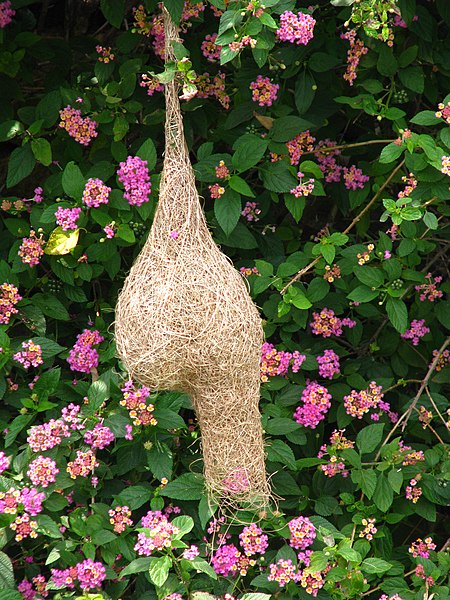
Amazingly Interesting Facts About Peculiar Birds’ Nests


Almost all birds build their own nest. A few don’t build any at all while scores will utilize abandoned nests, burrows or cavities on trees. Some birds are bizarre in creating their nest. Here are some of them.


1.) Cave Swiftlets’ nests are made of their saliva. These saliva nests of Cave Swiftlets are used to make “Bird’s nest soup” in parts of Southeast Asia. Bird’s nest soup is one of the most expensive food in the world and is regarded as an exotic aphrodisiac.

2.) The Horned Coot’s type of nest is called a mound. The base of the enormous nest they built is made of stones which they gathered using only their beaks.

3.) These stones, which are up to 450 g each are dropped into the shallow water of a lake, making a cone-shaped pile which can measure as much as 4 m2 at the bottom and 1 m2 at the top, and 0.6 m in height.

4.) The total combined weight of the mound's stones built by Horned Coots is about 1.5 tons or 1,400 kg. A sizable platform of aquatic vegetation is constructed on top of the mound.

5.) Egyptian Plovers and Three-banded Coursers are distinct in their habit of partially burying their eggs in the sand of their scrapes – the simplest type of nest.


6.) Woodpeckers are among the strongest creatures in relation to their beaks. They use their chisel-like bills to excavate their cavity nests, a process which takes, on average, about two weeks.

7.) The Red-cockaded Woodpecker, an endangered species, takes up to two years to excavate its nest cavity but can reuse it for more than two decades.

8.) Red-cockaded Woodpeckers peel bark around the entrance, and drill wells above and below the hole; since they nest in live trees, the resulting flow of resin forms a barrier that prevents snakes from reaching the nests.

9.) The Red-breasted Nuthatches smear sap around the entrance holes to their nests for protection from predators.

10.) For protection from predators, the White-breasted Nuthatches rub foul-smelling insects around their nests.

11.) Eurasian Nuthatches have a unique way of protecting their nests. They wall up part of their entrance holes with mud, decreasing the size and sometimes extending the tunnel part of the chamber.

12.) Most female Hornbills seal themselves into their cavity nests, using a combination of mud, food remains and their own droppings to reduce the entrance hole to a narrow slit.

13.) Grebes, an aquatic species, are very careful when approaching and leaving the nest so as not to reveal the location. Some species will use leaves to cover up the nest prior to leaving.

14.) The Australian Magpie, a popular Australian bird species, is noted for attacking persons that get near its nest.

15.) It was discovered that some birds choose aromatic green plant material for constructing nests that may have insecticidal properties, while others may use materials such as carnivore scat to repel smaller predators


16.) The Malleefowl uses the sun to help warm its nest. The bird opens the mound at midday during the cool spring and autumn months to expose the plentiful sand incorporated into the nest to the sun's warming rays, then using that warm sand to insulate the eggs during the cold nights. During hot summer months, the Malleefowl opens its nest mound only in the cool early morning hours, allowing excess heat to escape before covering the mound again completely.

17.) Some birds use pieces of snake slough in their nests. It has been suggested that these may deter some nest predators such as squirrels

18.) Seabirds, Penguins, Flamingos, Herons, Gulls, Terns, Weavers and some Corvids and Sparrows gather together in sizeable colonies while most birds nest individually

19.) The nests of Burrowing Parakeets can extend for more than three meters or about 10 ft.

20.) Buff-breasted Paradise Kingfishers have a unique way of building their nests. They dig their nests into the compacted mud of active termite mounds, either on the ground or in trees.

21.) Some Crepuscular petrels and Prions are able to identify their own burrows within dense colonies by smell.

22.) Crab Plovers use burrow nest, the warmth of which allows it to leave the eggs unattended for as long as 58 hours

23.) D’Arnaud’s Barbets dig vertical tunnel shaft more than a meter deep, with its nest chamber excavated off to the side at some height above the shaft's bottom

24.) Puffbird is a ground-nesting species, prefers flat or gently sloping land, digging their entrance tunnels into the ground at an angle.

25.) Like Horned Coots, Flamingos type of nest is also called a mound. These lovely-looking birds make a different type of mound nest. Using their beaks to pull material towards them, they fashion a cone-shaped pile of mud up to 46 cm tall with a small depression in the top to house their single egg. The height of the nest and the circular, often water-filled trench which surrounds it help to protect the egg from fluctuating water levels and excessive heat at ground level.


See also

Reaction

Explore

Custom Search

Chitika

Chitika

Chitika